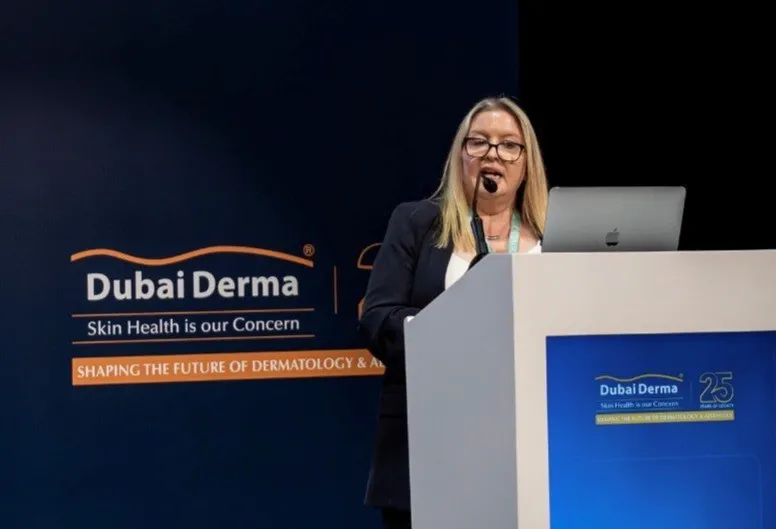



Drawn from his new book Faces, Professor Patrick Treacy makes the case that aesthetic medicine is not a menu of procedures but a question of identity – and that the practitioner’s most important instrument is restraint.
Why do we want to change our faces? It sounds like a simple question. It isn’t. It pulls you into some of the oldest territories in human life – identity, beauty, survival, status, the need to belong.
I’ve spent decades in aesthetic and regenerative medicine, and in that time, I’ve watched the relationship between face and self-play out in thousands of ways. My patients include surgeons, students, artists, accountants, public figures, and people with no public profile at all. Some want something subtle: a softened line, a restored contour, a more rested look. Others carry something harder to name – the need to reclaim confidence after illness, ageing, trauma or loss. What unites them isn’t vanity. Its identity. They are not asking to become someone else. More often, they are asking to look like themselves again.
This became especially clear to me during a visit to Pakistan. I was walking through a hospital corridor before an academic lecture when I came across a queue of doctors waiting for aesthetic treatment – highly educated, accomplished professionals. They weren’t chasing dramatic transformation or celebrity ideals. They wanted something quieter: a small recalibration of how they were perceived, and perhaps how they perceived themselves.
One sentence, repeated across clinics worldwide, captures this better than any theory: “I just want to look how I feel inside.”
The face is not superficial
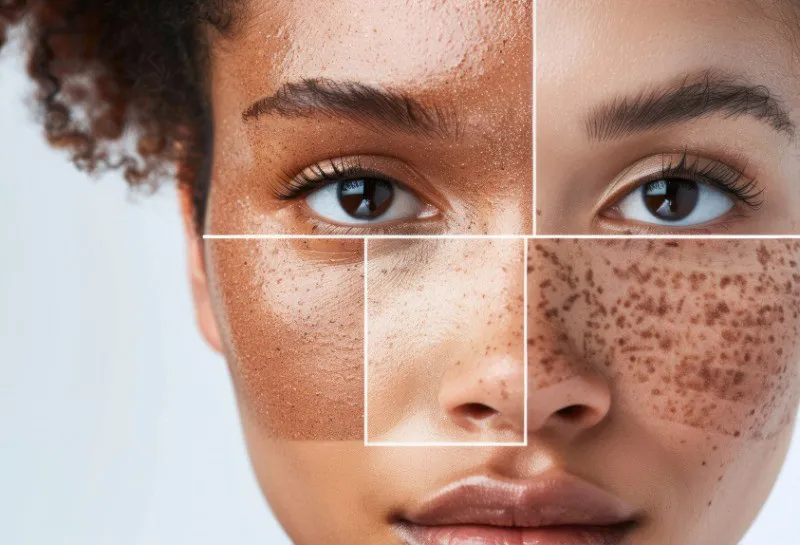
Aesthetic medicine is frequently dismissed as vanity dressed up in medical language. That view misses a deeper biological reality. The face is one of the most information-rich structures in human evolution. Long before language existed, facial cues signalled threat, health, intent and alliance. Entire regions of the brain – the fusiform face area among them – are dedicated almost exclusively to recognising and interpreting faces. Within milliseconds, well before conscious thought, we form judgements about trust, health, dominance and emotion.
So when patients express distress about how they look, they are rarely responding to surface concerns alone. They’re responding to a mismatch – between how they feel on the inside and how they believe they are being read on the outside. That mismatch can quietly erode confidence, relationships and a person’s sense of continuity with their own life. Understood this way, aesthetic intervention is not about imposing an external ideal. It’s about reducing the distortion between who someone is and how they are perceived.
Not a menu of procedures
Modern aesthetic medicine is often misunderstood as a collection of techniques – a menu to be selected from and applied. But no treatment is interchangeable, and no intervention is neutral. To use these tools responsibly, you have to understand not only what they do, but what they cannot do.
Botulinum toxin is the most recognisable tool in practice, and one of the most misunderstood. Used correctly, it softens hyperactive muscles without altering identity. But it does more than reduce movement. The facial feedback hypothesis – first proposed by Darwin, later expanded by William James – holds that expression doesn’t merely reflect emotion but participates in creating it. Interrupting chronic frowning may reduce the reinforcement of negative states; the work of Finzi and Wollmer demonstrated reductions in depressive symptoms following glabellar treatment, and imaging studies have shown altered limbic activity afterwards. Yet the same logic produces a paradox: if reducing negative expression can lift mood, then limiting the muscles of smiling may do the opposite. Botox is not simply a cosmetic agent. It’s a neuromodulator with psychological consequences.
If toxin addresses movement, fillers address structure. Ageing is not primarily a process of wrinkling – it’s volume redistribution and skeletal remodelling. Used appropriately, hyaluronic acid fillers don’t create new features; they re-establish existing ones, and in that sense can restore identity. But they occupy space rather than regenerate tissue, and that distinction is critical. Overuse leads to distortion: heaviness, lost contour, a face that becomes less expressive and, over time, less recognisable.
Beyond movement and volume lies a different approach entirely – one that engages with the biology of the skin itself.
From structural correction to biological signalling
The most significant evolution of recent years has been the move toward regenerative approaches: rather than replacing volume or inhibiting movement, stimulating the body’s own capacity for repair. Platelet-rich plasma is central to this – derived from the patient’s own blood, its effects are initiated from within rather than imposed from outside. Patients often experience such treatments as more natural, not just in origin but in outcome.
Much of my own work has centred on combining photobiomodulation – red and near-infrared light that boosts mitochondrial activity and reduces oxidative stress – with platelet-based therapies. That philosophy is embodied in the Dublin Lift, a minimally invasive, bio-stimulatory technique combining PRP, targeted injection and light to stimulate intrinsic regenerative pathways rather than impose structural change. It led to the HELPIR technique (Haemoderivative Enhanced Light Phototherapy for Induction of Regeneration), and later to the PLUS protocol (PRP, Light, Ultrashape, Stem-cell activation), which integrates multiple modalities to support deeper repair – particularly relevant in stress-related ageing, post-traumatic tissue changes and recovery following surgery.
At the frontier sits cellular signalling – exosomes and the wider secretome, which act as biological messengers instructing existing cells how to respond to stress, injury and ageing. They don’t become tissue; they guide it. But the evidence base remains variable, and that creates a risk of overclaiming. This is why, at AMWC, I introduced the principle of biological honesty: acknowledging openly both the strengths and the limits of regenerative medicine. Marketing inflates words like “regeneration” and “rejuvenation.” Integrity means valuing real mechanisms and actual outcomes over aspirational language. These therapies are adjunctive – supportive, not definitive. Every tool has limits. Botox doesn’t restore structure. Fillers don’t regenerate tissue. Bioactives can’t reshape anatomy. Regenerative therapies don’t reverse ageing. Misjudging those limits leads to over-treatment and eroded trust.
Reading the patient, not the request
Which brings me to the part of this work that no tool can perform. Every intervention, however small, changes not only how a person looks but how they are perceived, how they are treated, and how they come to understand themselves. To intervene in the face is to intervene in the feedback loop between self and world. That carries responsibility.
Patients arrive with concerns that may be long-standing and genuine, or shaped by social pressure and passing trends. A patient might say, “I want fuller lips,” but beneath the request could lie a desire for confidence, visibility or acceptance – or an ideal that is neither stable nor attainable. The practitioner’s role is not to execute requests blindly. It’s to interpret them. Is the goal self-expression, or self-erasure? Listening, in this context, isn’t passive. It’s diagnostic.
And one of the most important decisions in aesthetic medicine is choosing not to proceed – when expectations are unrealistic, when the request stems from dysmorphia or deeper distress, when treatment risks doing more harm than good. Ethical practice means being willing to say no with confidence, and to prioritise long-term wellbeing over the impulse to fulfil every request that comes through the door.
We have reached a point where the technical possibilities are vast. The question is no longer just what can be done, but what should be done. The face shouldn’t be treated as a canvas. It is a living interface between biology, identity and society. Altering it demands more than skill. It demands careful thought, honest conversation, and judgment that no tool or technique can replace.
Because when someone asks to change their face, they are rarely asking for something superficial. More often, they are asking to be seen – clearly, accurately, and as they truly are.
Faces: Why They Matter and What They Reveal – Science. Identity. Humanity. – recently reached number one on Amazon and is available now in paperback and Kindle.
https://www.amazon.co.uk/FACES-They-Matter-What-Reveal/dp/153560784X
Unlock a treasure trove of aesthetic knowledge!