

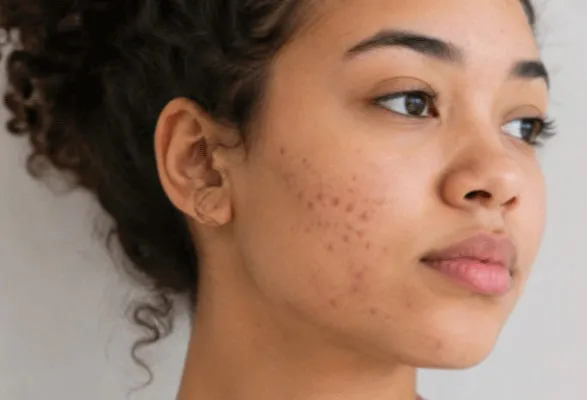

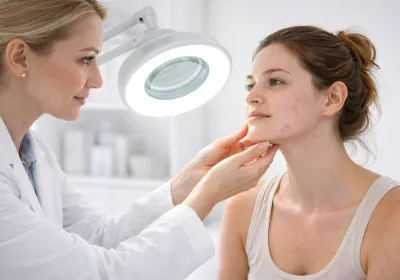
Most teenagers with acne are told the same things: use this cream, try this antibiotic, wait and see. For a significant proportion, that advice produces limited results - and the reasons why are more instructive than the advice itself.

This overview covers four areas that are underrepresented in standard patient-facing information: the biology behind treatment-resistant acne, the access pressures facing UK families right now, what the MHRA's recent changes to Roaccutane prescribing mean in practice, and the emerging clinical evidence around LDM® Triple as a non-pharmaceutical alternative.

Acne begins as inflammation

Acne begins as inflammation before the first spot appears

The conventional explanation of acne as a bacterial or sebum problem is incomplete. Research published in Frontiers in Immunology (2024) confirmed that inflammatory activity in acne-prone skin is detectable at a cellular level before any visible lesion forms. The immune response is already active in skin that appears clear.

This has direct implications for treatment selection. Approaches that target bacteria or surface oil are, by definition, responding to downstream effects rather than the upstream cause. It is one of the more credible explanations for why first-line treatments so often produce partial rather than complete results - and why inflammation-modulating approaches are attracting increasing clinical attention.

The NHS pathway works - up to a point

Standard NHS treatment for teenage acne follows a structured escalation: a 12-week topical treatment plan, followed by oral antibiotics for moderate cases, and then a dermatology referral for isotretinoin when other options have failed. The framework is sound. However, for many families, the challenges begin with accessing and progressing through the pathway.

Two pressure points are particularly important:

Antibiotic duration. UK guidelines recommend limiting oral antibiotic courses to three to four months. Research from Harrogate and District NHS Foundation Trust found that in some areas, over half of acne patients were receiving treatment beyond 24 weeks. The same research identified a significant awareness gap: 74% of patients were concerned about antibiotic-resistant infections later in life, yet only 25% of clinicians felt their patients understood antibiotic resistance as a concern. This gap requires greater attention.

Waiting times. NHS dermatology referrals in England have an average wait of around 43 weeks, with some areas experiencing considerably longer delays. For teenagers with moderate-to-severe acne, this delay can affect both skin health and, as documented in many cases, mental health and confidence. It is a key reason why some families explore private treatment options.

Roaccutane for under-18s: what changed, and what it means

Roaccutane for under-18s: what changed, and what it means

The regulatory framework around isotretinoin prescribing for teenagers changed significantly in October 2023, when the MHRA introduced new safety requirements for patients under 18. These included mandatory in-person mental health and sexual wellbeing assessments before starting treatment, along with a requirement for a second prescriber sign-off. The second prescriber requirement was removed in January 2026, but enhanced monitoring measures remain in place.

The changes followed concerns, including those raised by bereaved families, about potential psychiatric side effects associated with isotretinoin. The MHRA’s expert review concluded that the available evidence was insufficient to confirm a definitive causal link, but determined that precautionary monitoring was appropriate due to the remaining uncertainty and the age group involved.

For families considering this treatment route, the practical reality is that accessing isotretinoin now involves a more detailed process than before, including mandatory assessments, ongoing monitoring at follow-up appointments, and the potential impact of existing NHS dermatology waiting times before treatment can begin.

Isotretinoin remains the most effective pharmaceutical treatment option for severe acne, but for teenagers, the pathway to accessing it now involves additional steps and closer monitoring compared with three years ago.

Clinical evidence: LDM® Triple for acne

A retrospective two-centre study published in the Journal of Cosmetic Dermatology (2024) evaluated triple-frequency LDM ultrasound (TF-LDM) in 22 patients with mild-to-severe acne vulgaris.

Key findings included:

  • 73.69% average improvement in acne severity scores at the end of treatment (p < 0.01)
  • 90.14% average improvement at follow-up assessment after treatment had ended (p < 0.01)
  • No significant adverse effects reported in either treatment group
  • No meaningful difference in outcomes between frequency configurations (1/3/10 MHz compared with 3/10/19 MHz)

Source: Chervinskaya IG, Gaidash NV, Kruglikov IL. Journal of Cosmetic Dermatology, 2024. DOI: 10.1111/jocd.16672

What LDM® Triple offers as an alternativejocd.16672

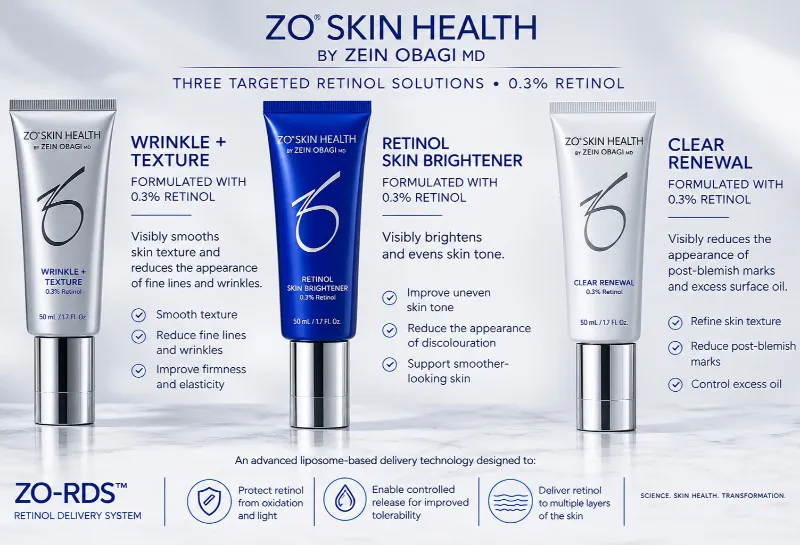
LDM® Triple is a triple-frequency therapeutic ultrasound device developed by Wellcomet GmbH. It works by rapidly alternating between different ultrasound frequencies (typically 1, 3 and 10 MHz) during a single treatment session, allowing it to target different depths within the skin. The technology uses mechanical acoustic pressure waves rather than heat or ablation, meaning there are no needles, no downtime, and no systemic effects on the body.

For teenage skin, this treatment profile can be particularly relevant. Unlike isotretinoin, LDM® Triple does not require blood monitoring and does not carry the same concerns around interactions with hormones or other medications. Unlike laser-based treatments, it does not target melanin and does not involve photosensitivity risks. Suitability should always be confirmed during a consultation, but the lack of restrictions associated with many other acne treatments makes it a consideration for younger patients.

The 2024 study data, showing an average 90% improvement in validated acne severity scores at follow-up with no significant adverse effects reported, provides encouraging evidence for this non-invasive approach. As with all clinical studies, individual results will vary, and findings should be considered alongside a personalised assessment from a qualified practitioner rather than as a guaranteed outcome.

LDM® Triple is currently available at a limited number of specialist clinics in the UK, primarily in London. It is offered within the private healthcare sector and is not currently available through the NHS.

Read the full guide on Anglo Arab Trading

For a detailed, section-by-section explanation of the NHS treatment pathway, the MHRA regulatory changes, LDM® Triple's mechanism and clinical evidence, and guidance on accessing treatment in the UK, the full guide is available on the AAT website.

Read the full guide at angloarab.co.uk

Find a clinic offering LDM® Triple

LDM® Triple is distributed in the UK by Anglo Arab Trading. Use the AAT clinic finder to locate a trained practitioner near you.

Find a clinic at angloarab.co.uk

This article was prepared by Anglo Arab Trading (AAT UK), distributor of LDM® Triple in the UK and UAE.

Clinical information has been drawn from peer-reviewed sources and publicly available NHS and MHRA guidance. This article is intended for informational purposes only and does not constitute medical advice. Always consult a qualified healthcare professional before making treatment decisions.

Sources:

• Chervinskaya et al. Journal of Cosmetic Dermatology, 2024. DOI: 10.1111/jocd.16672
• Association of different cell types and inflammation in early acne vulgaris. Frontiers in Immunology, 2024
• MHRA: Isotretinoin safety measures for under-18s, October 2023. gov.uk
• PAR Isotretinoin Implementation Review, January 2026. gov.uk
• NHS Harrogate: Acne antibiotic over-exposure study. hdft.nhs.uk
• London Dermatology Centre: Dermatology Waiting Times UK, 2024
• Dermatology Times: 90% Acne Severity Reduction with TF-LDM, June 2026

Got Questions?

Frequently Asked Questions

Why does teenage acne sometimes not improve with creams and antibiotics?
Teenage acne is often treated by targeting bacteria, oil production and visible spots, but acne is also driven by inflammation within the skin. Research has shown that inflammatory activity can begin before spots are even visible, meaning the skin may already be reacting beneath the surface. This helps explain why some teenagers see only limited improvement with traditional first-line treatments. Treatments that focus on calming inflammation are becoming an area of increasing clinical interest alongside existing acne therapies.
What treatment options are available through the NHS for teenage acne?
The NHS follows a structured approach to treating acne. This usually begins with topical treatments such as creams or gels for around 12 weeks. If acne is more moderate, oral antibiotics may be considered, and if other treatments have not worked, a referral to dermatology for isotretinoin (Roaccutane) may be recommended. While this pathway is effective for many patients, some families experience challenges accessing specialist care, including long dermatology waiting times. These delays can be particularly difficult for teenagers dealing with persistent acne and its impact on confidence and wellbeing.
What has changed with Roaccutane (isotretinoin) prescribing for teenagers?
In October 2023, the MHRA introduced additional safety requirements for patients under 18 taking isotretinoin. These included in-person mental health and sexual wellbeing assessments before treatment, as well as closer monitoring during treatment. The changes were introduced following concerns about possible psychiatric side effects. The MHRA review found that available evidence did not establish a definite causal link, but recommended additional monitoring as a precaution due to the seriousness of the concerns and the age group involved. Isotretinoin remains one of the most effective treatments for severe acne, but accessing it now involves a more detailed assessment and monitoring process.
What is LDM® Triple and how could it help with acne?
LDM® Triple is a non-invasive therapeutic ultrasound treatment developed by Wellcomet GmbH. It uses rapidly alternating ultrasound frequencies to target different depths of the skin during a single treatment session. Unlike some acne medications, LDM® Triple does not involve needles, does not require recovery time, and has no systemic effect on the body. It does not require blood monitoring and does not carry the same medication interaction considerations associated with treatments such as isotretinoin. Suitability depends on an individual assessment with a qualified practitioner.
Is there clinical evidence that LDM® Triple can improve acne?
A 2024 retrospective two-centre study published in the Journal of Cosmetic Dermatology assessed triple-frequency LDM ultrasound in patients with mild-to-severe acne vulgaris. The study reported an average improvement in acne severity scores of 73.69% at the end of treatment and 90.14% at follow-up after treatment had ended. No significant adverse effects were reported. While these results are encouraging, individual outcomes can vary, and treatment decisions should always be based on advice from a qualified healthcare professional.
Where can teenagers access LDM® Triple treatment?
LDM® Triple is currently available through a limited number of specialist private clinics in the UK, mainly in London. It is not currently available through the NHS. Families interested in exploring LDM® Triple should speak with a trained practitioner who can assess whether the treatment is suitable and discuss the most appropriate options for their individual circumstances.
Read it? Loved it? Want to share it?

Hey, wait!

Before you go.....

Let's stay in touch, pop your details here and we'll send our editor's hand-picked updates on your fave subjects.