

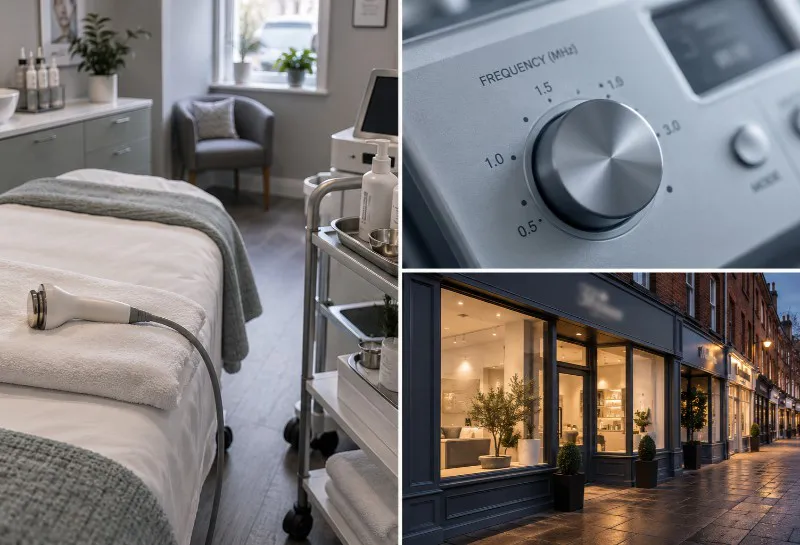


Most ultrasound devices in aesthetic clinics operate at a single frequency at a time. Triple-frequency devices don't: they cycle rapidly between several, drawn from a range spanning roughly 1 to 19 MHz, which means the device can work from the upper layers of the skin right through the fat beneath it and into fascia and muscle.
That range is the whole story commercially. It's why this category is being described as genuinely different from the single-frequency ultrasound most practitioners already know, rather than just another variant of it.
This piece covers:
- What "triple-frequency" actually means mechanically
- How it differs from HIFU, and where its own strengths lie
- Why UK clinics are moving on it now
- What to have in place before adding it to a treatment menu
Introduction
For most UK practitioners, "ultrasound" in an aesthetic context means one of two things: HIFU for lifting, or the low-frequency, single-wave devices used for product penetration and lymphatic drainage. Triple-frequency ultrasound sits outside both categories, which is why it's worth understanding properly before it shows up on a rep's price list.
The technology isn't new in principle. Physiotherapists and other clinicians have used multi-frequency ultrasound for years. What's changed is its packaging into aesthetic devices that can shift between frequencies fast enough to treat multiple tissue depths in a single pass, rather than requiring separate handpieces or appointments for surface and deep-tissue work.
That matters commercially as much as clinically. The UK aesthetic devices market is forecast by Spherical Insights to grow at a CAGR of 9.76% between 2025 and 2035, and much of that growth is being driven by devices that can do more within a single treatment session. A device that works across several tissue levels in a single pass changes the maths on both treatment time and the number of separate technologies a clinic needs to stock.
There's also a category confusion worth clearing up early. "Multi-frequency" and "triple-frequency" are used loosely in supplier marketing, sometimes referring to devices that offer a menu of frequency settings for a practitioner to select from, and sometimes referring to devices that alternate between frequencies within the same treatment pass. Knowing the difference matters when comparing suppliers.
The rest of this piece explains what triple-frequency ultrasound does at a mechanical level, how it compares to HIFU, why UK adoption is accelerating now, and what a clinic should have in place before bringing it into a treatment room.
The Mechanism, Explained Simply
Three Frequencies, Not Three Treatments
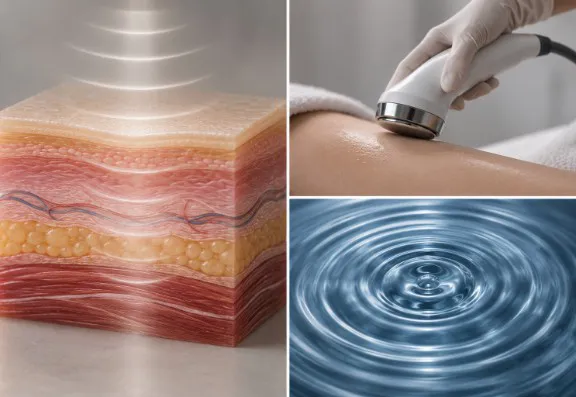
The core idea behind triple-frequency ultrasound is straightforward. A single handpiece cycles through several ultrasound frequencies, applying three of its four frequencies, drawn from 1, 3, 10 and 19 MHz, and switching between them every 1 to 10 milliseconds, far faster than tissue can respond to each one separately.
Each frequency behaves differently in tissue, and that's the entire point of combining them. 19 MHz works in the upper 1 to 2mm of the skin. 10 MHz reaches to around 3mm, at the boundary between the dermis and the fat beneath it. 3 MHz works through the full subcutaneous fat layer to around 20mm, and 1 MHz deeper again, into fascia and muscle. A practitioner isn't choosing one depth per session. The device is addressing several at once.
Why Depth Range Is the Clinically Relevant Detail
The "triple" in triple-frequency refers to three frequencies running within a single pass, not to a menu of settings or a claim about depth. A single-frequency ultrasound device is mechanically limited to whatever tissue plane its one frequency reaches. A device alternating three frequencies within one pass is covering epidermis, dermis, subcutaneous fat and deeper tissue within a single treatment window.
That range underpins the breadth of indications for which these devices are used, from surface-level texture and hydration work through to deeper structural support. It's also a category where the clinical picture is developing fast, as real-world use across a growing UK clinic network continues to add to the clinical picture alongside the underlying ultrasound science, which is itself well established
How It Differs From HIFU and Thermal Ultrasound
Two Different Mechanisms, Two Different Strengths
HIFU is the modality most practitioners will instinctively compare this to, since it's the established benchmark for non-surgical ultrasound-based lifting. HIFU delivers focused ultrasound energy that stimulates collagen production through controlled thermal injury in targeted tissue. Triple-frequency ultrasound takes a different route entirely: mechanical and micro-massage effects across multiple depths, without relying on thermal coagulation.
That difference is what gives triple-frequency ultrasound its own clear commercial identity, rather than making it a "lite" version of something else.
Where Each Technology Earns Its Place
Both technologies have earned their position in the market. A comprehensive review of HIFU studies published between 2010 and 2025 found that the technology is generally safe and effective, with most complications being mild and transient, and that, for deep structural lifting in the lower face and neck, it remains a well-evidenced option.
Triple-frequency ultrasound's non-thermal mechanism gives it a genuinely distinct role: comfortable, no-downtime treatment suited to sensitive-skin work, recovery support and patients who are specifically looking to avoid heat-based intervention.
What This Means for Positioning
HIFU and triple-frequency ultrasound serve different clinical goals, which is exactly what makes them complementary rather than competing additions to a treatment menu. The strongest positioning for triple-frequency ultrasound leans into what makes it distinct: comfort, safety profile and versatility across depths, standing on its own clinical merits.

Why This Is Landing in UK Clinics Now
A Market Already Moving Toward Downtime-Free Treatment
Timing matters as much as mechanism. The UK non-invasive aesthetics industry grew by 8%-9% in 2026, with the sector now estimated at around £3.6 billion [PolicyBee, 2026 — https://www.policybee.co.uk/blog/aesthetics-industry-statistics, "The UK aesthetics industry: key trends, market growth and statistics"], and energy-based devices remain among the strongest contributors to that growth. That growth is concentrated in treatments that fit a specific patient expectation: visible improvement without recovery time built into the calendar.
Triple-frequency ultrasound fits that expectation cleanly, precisely because its non-thermal mechanism avoids the swelling and downtime that come with heat-based alternatives. That's a large part of why the category is gaining real traction now.
Still an Emerging Category, With Room to Lead
Unlike HIFU or RF microneedling, which are widely available in UK clinics, the distribution of triple-frequency ultrasound is still being built out. One UK and Ireland distributor describes their current focus as growing a network of 16 partner clinics across the UK and Ireland.
That's a genuine first-mover opportunity. Being early in a differentiated, still-uncrowded category means local market positioning is still available to claim, well ahead of the point where every clinic on the high street offers the same thing.
The Opportunity in Being Early
Early positioning brings real commercial upside for clinics that invest now, including the chance to lead on patient education in a category most competitors haven't yet learned to explain well. Broader sector growth is real, patient appetite for non-thermal options is real, and the category remains under-provisioned relative to where the wider market is heading.

What Clinics Should Have in Place Before Adding It
A Structured Course That Builds Recurring Revenue
Reported protocols vary by indication, but a recurring pattern among UK providers is a course of six to ten sessions depending on the indication, followed by periodic maintenance treatments. That structure is commercially attractive: it builds a natural rhythm of return visits, provided front-desk and consultation teams set accurate expectations from the first booking.
Pricing Sits Within an Established Range
Triple-frequency ultrasound doesn't require a new pricing model. It's generally positioned within a comparable range to other professional aesthetic treatments - IPL, for comparison, runs approximately £250 to £425 per session, with multi-session packages from around £875 [Unverified - recommend manual check before publishing: source this to Consulting Room's own clinic pricing data or a named pricing survey before publishing]. Clinics already pricing energy-device courses have a reasonable benchmark to work from.
Getting Ahead of the 2026 Regulatory Changes
The MHRA's draft Medical Devices (Amendment) Regulations 2026 represent the biggest transformation of the UK medical device framework since Brexit. As of April 2026, there's no upfront MHRA registration fee; instead, there's an annual fee of £300 per GMDN Level 2 device category [BHTA, 2025 — https://www.bhta.com/mhra-publishes-updated-response-on-statutory-fees-for-medical-device-registration/]. Clinics that confirm UKCA marking and current MHRA registration status directly with their supplier now are well placed to move quickly and with confidence once they commit, and to reassure patients and insurers alike.
A Growing Evidence Base
As a newer category, triple-frequency ultrasound's independent clinical literature is still building compared with decade-long established modalities like HIFU and RF microneedling. The underlying ultrasound science, however, is well established, and real-world use across UK and European clinics continues to add to the evidence picture. Practitioners are well placed to ask suppliers for the latest indication-specific data as it emerges.
Where This Fits Next
Triple-frequency ultrasound is landing in the UK market at a genuinely good moment: non-thermal, downtime-free treatments are in real demand, distribution is still being built out rather than saturated, and early movers stand to claim local market positioning others haven't yet reached.
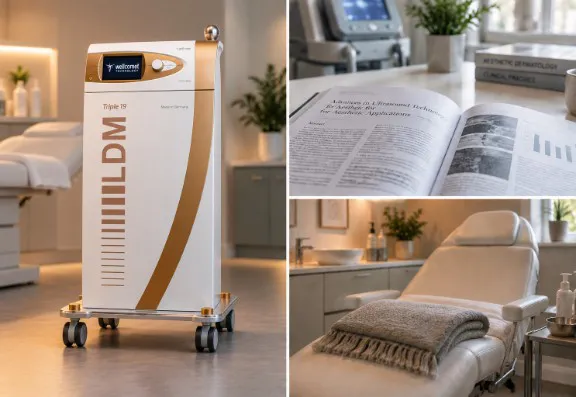
LDM® Triple is one example of a device built around this triple-frequency approach, offering practitioners a strong reference point for what the technology looks like in a clinical setting. If you're weighing up whether this category fits your treatment menu, the LDM® Triple campaign page is a good next stop for the practical detail this piece has stayed general on: current UK pricing, device classification and UKCA/MHRA registration status.
For anything beyond that, email us at admin@consultingroom.com with "LDM® Triple" in the subject line, and we'll send you full details.