


The new skincare system is designed to support pre- and post-treatment skin care in aesthetic clinics, with professional and take-home formats available from September 2026.
prept®, a new hypochlorous acid (HOCl) skincare system, launched in the UK on 30 September 2026, offering aesthetic clinics a product designed for use before and after aesthetic procedures, as well as in daily skincare routines.
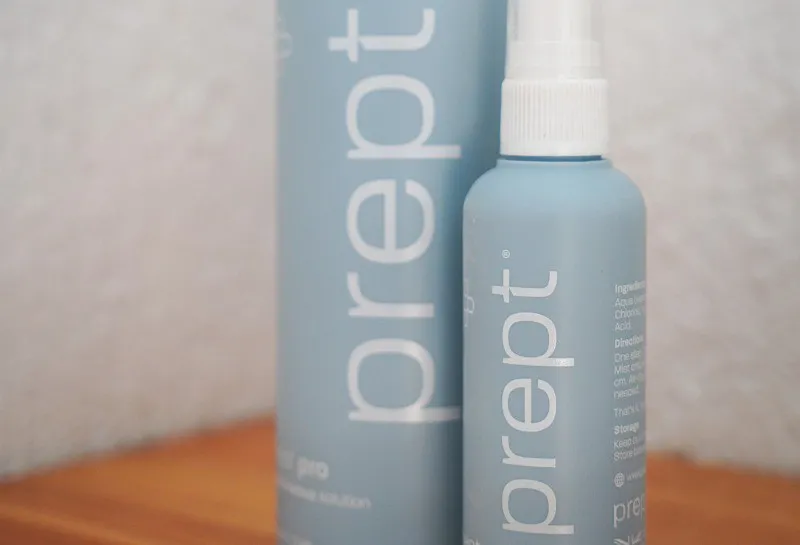
Developed by experienced aesthetic doctor Dr Kam Lally and his co-founders, prept® focuses on skin preparation, post-procedure care and ongoing maintenance through a three-step approach. The system is available in two formats: prept® PRO, a 500ml professional product for in-clinic use, and prept® GO, a 100ml take-home format intended to support continuity of care after treatment.
The brand aims to distinguish its formulation from other hypochlorous acid products through its manufacturing process, purity specifications and approach to product stability.
A three-step approach to skin preparation and aftercare
The prept® system follows a simple three-step plan designed to fit into existing clinic protocols and patients' daily routines.
-
Prep: Refresh and prepare the skin surface before treatment.
-
Treat: Proceed with the practitioner's usual treatment protocol.
-
Go: Provide patients with prept® GO to support ongoing skincare following their appointment and as part of their daily routine.
The approach is intended to connect in-clinic skin preparation with at-home care, giving practitioners a product they can incorporate into their treatment pathways and recommend for continued use where appropriate.
As with any product used around aesthetic procedures, practitioners should assess suitability for the individual patient and follow the manufacturer's instructions alongside their established clinical protocols.
How is prept® formulated?
According to the brand, prept® is produced using an advanced electrolysis process that avoids acidification and bleach conversion. The company states that its formulation has a purity of 99.6% and is manufactured without stabilisers or unwanted by-products.
Hypochlorous acid is used in a range of skincare and wound-care applications. However, products labelled as HOCl can differ in their manufacturing methods, composition and stability. prept® positions its production process as a key point of difference, with an emphasis on consistency and compatibility with the skin.
Co-founder Dr Kam Lally explained the thinking behind the product:
“We’re delighted to introduce prept® to UK medical aesthetics professionals and patients. Hypochlorous (HOCl) has quietly become a “same label, same molecule” category that is used by default, and rarely questioned. Two products can both be labelled HOCl while being fundamentally different. The simple truth is that not all HOCl is the same, and how it is made truly matters.
Once I understood the differences, I couldn’t ethically continue using traditional formulations in my clinic and on my patients. Before (and after) any aesthetic procedure, I only want the purest, most biologically compatible option available. When I couldn’t find it, I decided to formulate my own.
prept® exists to reset the assumption that ‘all HOCl is equal’ and raise category standards to what clinics and patients should expect and deserve.”
Reported clinical and product performance findings
The company has shared several findings relating to the performance of prept® and hypochlorous acid.
According to the supplied launch information, university-based electron microscopy tissue work found no tissue damage associated with HOCl compared with alcohol-based products, with tissue structure maintained and hydration increasing by up to five times. The data is reportedly being prepared for publication.
The company also cites independent trials in which prept® reportedly:
-
Reduced blemish severity by up to 27% over two weeks.
-
Achieved a rating of 4.21 out of five.
-
Recorded zero adverse reactions during the trials.
These findings are company-reported. The full study methods, sample sizes, comparators and statistical analyses were not provided in the launch information, so the results cannot be independently evaluated from the available details. The tissue findings also relate to the reported testing conditions and should not be interpreted as establishing safety for every procedure or patient.
Practitioners considering adding prept® to their protocols should request the supporting evidence and product documentation, including information on intended use, contraindications and compatibility with specific treatments.
Environmental considerations
prept® says its product and packaging have been developed with environmental considerations in mind.
According to the brand, the formulation is marine-safe and breaks down naturally into salt and water. Its packaging uses 100% recycled Prevented Ocean Plastic sourced from Bali, and the product is supplied without outer plastic packaging or cardboard boxes.
The company has also adopted a digital-first approach to clinic marketing materials, aiming to reduce unnecessary printing, packaging and waste.
These are manufacturer-reported environmental claims; further supporting information would be needed to independently assess the product's overall environmental impact.
Availability and product formats
prept® became available to professional clinics and partners from 30 September 2026 through the following suppliers:
The two formats are:
prept® PRO
A 500ml professional format intended for in-clinic skin preparation and treatment protocols.
prept® GO
A 100ml take-home format designed to support post-procedure skincare and daily use.
For further information about the products, visit www.preptskin.com