


By Claudia McGloin, RGN, Nurse Practitioner and The Regenerative Expert Nurse
Platelet-rich plasma (PRP) has become increasingly visible across aesthetic medicine, hair restoration and musculoskeletal practice. Its autologous nature and growing evidence base make PRP an attractive treatment for both practitioners and patients. But introducing PRP into a clinic should involve considerably more than purchasing a centrifuge, attending an injection course and adding another treatment to the website.
PRP is not a single, standardised product. What we ultimately inject can differ substantially depending on the patient providing the blood, how that blood is collected and handled, the preparation system and protocol used, and the cellular composition and volume of the final product. This variability remains one of the major challenges in PRP research and clinical practice.
So, before asking whether PRP would be a valuable addition to your clinic, perhaps the more important question is: are you clinically ready to provide it?
Start with the patient
One of the fundamental differences between PRP and an off-the-shelf injectable is that the patient provides the starting material. We take the patient’s blood, process it and return a concentrated autologous preparation to that same patient. Yet so much of the conversation around PRP still focuses on the centrifuge, the kit and the injection technique rather than the biology of the person sitting in front of us.
For me, PRP starts with assessment. This means establishing an appropriate diagnosis and indication, taking a comprehensive medical and medication history, identifying contraindications and considering factors that may influence suitability, safety or treatment response.
There is increasing recognition that patient characteristics contribute to PRP variability. Research involving more than 350 patients, for example, found that final PRP platelet concentration was significantly influenced by baseline platelet count and age, while substantial variation was also seen between preparations obtained from the same individual at different times.
This matters because autologous does not mean biologically identical. It is one of the reasons I use a simple framework within my own PRP practice: Assess → Optimise → Regenerate.
Optimisation does not mean performing indiscriminate blood panels or promising that correcting a particular biomarker will guarantee a better PRP result. The evidence does not support that approach. It means identifying clinically relevant and potentially modifiable factors as part of good patient assessment and addressing them appropriately.
Review medications properly
Medication history deserves particular attention. Platelet function is fundamental to PRP biology, so medications affecting platelet activity are clinically relevant. However, the evidence surrounding individual medications is complex and should not be reduced to blanket instructions telling every PRP patient to stop particular drugs.
Systematic reviews have reported effects of aspirin and some non-selective non-steroidal anti-inflammatory drugs (NSAIDs) on platelet aggregation, although the magnitude and duration of these effects vary according to the medication.
More importantly, practitioners should never advise patients to discontinue medically necessary antiplatelet or other prescribed therapy simply because they are having PRP without appropriate clinical consideration and, where necessary, liaison with the relevant prescriber.
A good PRP consultation therefore needs to establish not only what medication a patient takes, but why they are taking it.
Know what you are injecting
The term “PRP” can create a misleading impression that we are all injecting essentially the same thing. We are not. Two syringes may both be described as platelet-rich plasma while containing very different platelet, leukocyte and erythrocyte concentrations, different plasma volumes and different total platelet doses.
Expert consensus in musculoskeletal PRP has recommended characterisation that includes platelet, leukocyte and red blood cell counts, activation method and whether the preparation is plasma or fibrin. Other important variables include total PRP volume, injected volume and delivery method.
Practitioners should therefore understand what their preparation system actually produces. This includes:
-
The volume of blood collected and the final volume of PRP obtained.
-
Expected platelet recovery or concentration.
-
Whether the preparation is leukocyte-rich or leukocyte-poor.
-
What happens to erythrocytes during preparation.
-
Which anticoagulant is used, where applicable.
-
Whether the resulting preparation is appropriate for the tissue and indication being treated.
Knowing how to operate a centrifuge is not the same as understanding the biological product it produces.
Don’t overlook the blood draw
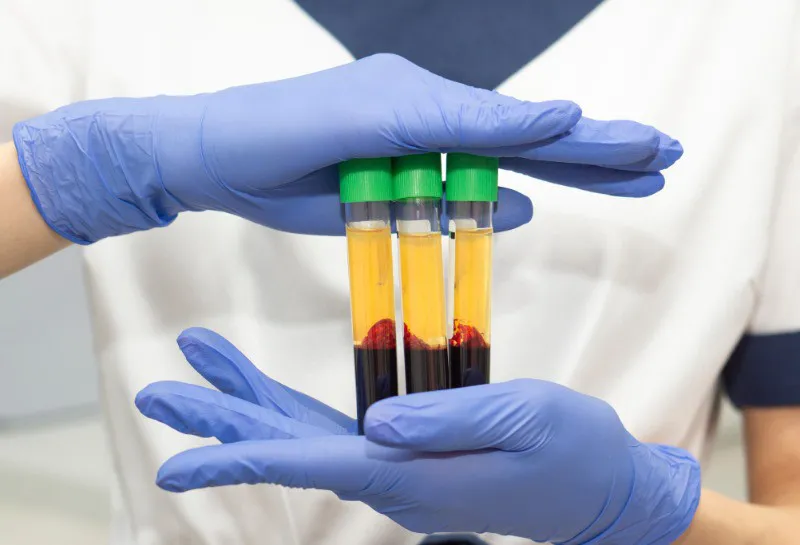
PRP begins before the centrifuge is switched on. Blood collection can sometimes be treated as simply the preliminary step required to obtain material for PRP, but it is part of the preparation process and requires appropriate competency.
Practitioners should understand their collection system, anticoagulant where applicable, correct fill volumes, handling requirements and the manufacturer’s validated protocol.
This becomes particularly important when PRP education focuses heavily on injection technique while comparatively little attention is given to venepuncture and the pre-analytical phase.
If blood is our starting material, how we obtain and handle that blood deserves the same clinical attention as how we subsequently inject the PRP.
Build a treatment pathway
Before launching PRP, clinics should map the patient’s entire journey, from consultation and establishing suitability through to consent, treatment planning, documentation and follow-up.
The pathway should not end when the injection is completed. Patients need clear aftercare information, an appropriate mechanism for contacting the clinic if they have concerns, planned clinical review and a defined escalation pathway if a complication is suspected.
Treatment response should also be assessed rather than assumed. Standardised photography and validated outcome measures, where appropriate to the indication, can make follow-up considerably more meaningful.
PRP should be viewed as a clinical pathway rather than an isolated procedure.
Prepare for complications
PRP is frequently described as safe because it is autologous. While its autologous nature is an important characteristic, it should never create complacency.
Any procedure involving venepuncture and injection carries potential risks, and practitioners require appropriate infection-control procedures, anatomical knowledge, complication recognition and documented escalation pathways.
The question during PRP training should therefore not only be, “Can I perform this injection?” It should also be, “Will I recognise when something is wrong, and do I know what to do next?”
Competency in PRP needs to encompass assessment, blood collection, preparation, treatment, aftercare, follow-up and complication management. Injection technique is only one part of it.
Educate the whole clinic
PRP education should not stop with the practitioner holding the syringe. Receptionists, patient coordinators and other members of the clinic team are often the first people patients speak to about treatment.
They do not need to become PRP clinicians, but they should understand what PRP is and, equally importantly, what it is not.
The team should know not to guarantee outcomes, provide clinical advice outside their competence or describe PRP as though it were a completely standardised treatment. They should understand the patient journey and recognise when a question or concern needs to be escalated to the treating clinician.
Consistent education across the clinic supports consistent communication and more appropriate patient expectations.
Audit what you do
Introducing PRP should not be the end of the process. Clinics should record indications, preparation protocols, treatment parameters, adverse events and patient outcomes.
PRP remains an evolving field, with continuing questions around optimal preparation, dose and indication-specific protocols. International expert consensus continues to identify preparation, dosing and quality control as areas requiring greater standardisation.
Clinical audit allows us to examine what is happening within our own practice rather than assuming treatment success. It can identify patterns, help refine protocols and improve the patient pathway over time.
Beyond the centrifuge
PRP has enormous potential, but its apparent simplicity can be deceptive. A blood draw, centrifugation and injection may describe the procedural steps, but they do not describe good PRP practice.
Good PRP practice starts with the patient. It requires appropriate assessment and patient selection, an understanding of the biological product being produced, competent blood collection and preparation, evidence-based treatment protocols, meaningful consent, complication preparedness and structured follow-up.
For clinics considering introducing PRP, the question therefore should not simply be, “Can we offer PRP?” It should be, “Are we ready to offer PRP properly?”
Because ultimately, the difference isn’t just the treatment. It’s the assessment, the product and the protocol.