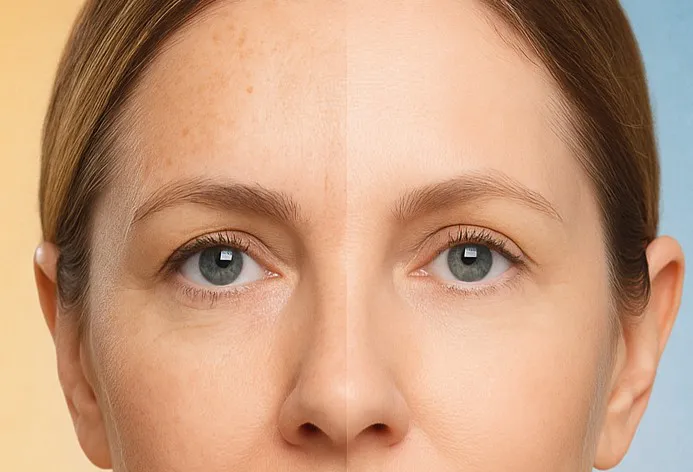


In the evolving world of aesthetic dermatology, innovations that combine effectiveness with minimal downtime are highly sought after—especially for professionals and women balancing busy lifestyles. One such breakthrough is the Thermo-Mechanical Fractional Device (TMFD), a novel technology showing impressive results even at low treatment settings. Recent clinical research reveals how TMFD improves signs of photodamage safely, comfortably, and with high patient satisfaction—making it an ideal option for skin rejuvenation without disrupting your daily routine.
In this post, we break down the key findings of a recent clinical study and explore how this technology stands apart in both performance and patient experience.
Download the full guide
Bernstein Safety and Effectiveness of a Thermo-Mechanical Fractional System at Low Settings for.pdf
What is TMFD and How Does It Work?
TMFD offers a heat-based, non-laser alternative for treating photodamaged skin. Unlike traditional lasers or chemical peels, TMFD:
-
Uses a heated, pyramid-tipped metal applicator set at 400°C.
-
Transfers thermal energy to the skin in milliseconds (5 ms in this study).
-
Creates micro-craters in a fractionated pattern, stimulating skin repair without breaking the surface.
Key Benefits:
-
No need for anaesthesia or cooling.
-
Minimal to no downtime.
-
No need for protective eyewear or disposable tips.
Clinical Study Insights: TMFD at Low Settings
A prospective clinical trial was conducted with 25 participants aged 38–70, receiving three TMFD treatments at monthly intervals. Researchers used conservative settings—5 ms pulse duration and 100 µm tip protrusion—to test safety and effectiveness with minimal disruption.
Fitzpatrick Wrinkle Classification Score (FWCS)
-
48% of subjects saw at least a 1-point improvement at 3 months post-treatment.
-
Statistically significant improvement in wrinkle distribution over time.
-
No adverse worsening in most participants.
Global Aesthetic Improvement Score (GAIS)
-
At 3 months, 96% had a "good to excellent" aesthetic improvement.
-
Evaluations factored in radiance, tone, and texture—not just wrinkle depth.
Patient Satisfaction
-
68% were “satisfied” to “very satisfied” with results.
-
100% were “satisfied” to “very satisfied” with the treatment experience.
-
Treatment pain was minimal (median scores: 2.5–3 out of 10).
How TMFD Compares to Other Skin Rejuvenation Methods
When compared to fractional CO2 lasers or non-ablative lasers, TMFD stands out:
| Feature | TMFD (Low Settings) | CO2 Laser | Non-Ablative Laser |
|---|---|---|---|
| Downtime | Little to none | 7+ days | Moderate (1–3 days) |
| Pain | Mild (2.5–3/10) | Severe (6.3/8) | Tolerable |
| Persistent Erythema | None reported | Up to 6 months | Mild |
| GAIS Improvement (3 months) | 96% Good to Excellent | 42.8% any improvement | ~30% tactile improvement |
Bottom Line: TMFD provides competitive, if not superior, aesthetic results with much less discomfort and recovery time.
A Future-Proof Tool for Modern Aesthetic Care
As professionals and aesthetics-conscious individuals seek more subtle yet effective interventions, TMFD proves itself as a standout option. It:
-
Delivers visible improvement in skin texture and tone.
-
Is suitable for repeat sessions and combination therapies.
-
Enhances absorption of topical agents due to micro-perforation.
While this study focused on monotherapy, TMFD is frequently combined with retinoids, antioxidants, or even other procedures for a more comprehensive skincare approach.
Conclusion
The study confirms that Thermo-Mechanical Fractional Devices—even at low settings—are safe, effective, and highly satisfying for patients looking to improve signs of ageing and photodamage. With minimal pain and downtime, TMFD fits seamlessly into modern lifestyles and skincare routines.
If you’re seeking a gentle yet powerful approach to skin rejuvenation, TMFD is a technology worth considering.
Smart Group Medical are more than a distributor – they are a partner to medical professionals who demand results and reliability.
- UK-based clinical team
- On-demand product training & in-clinic demonstrations
- Patient marketing tools to support your business
- Fast, reliable delivery and aftercare support
For more information, visit www.smartgroup-medical.co.uk or call 01344 371000 to find out more.