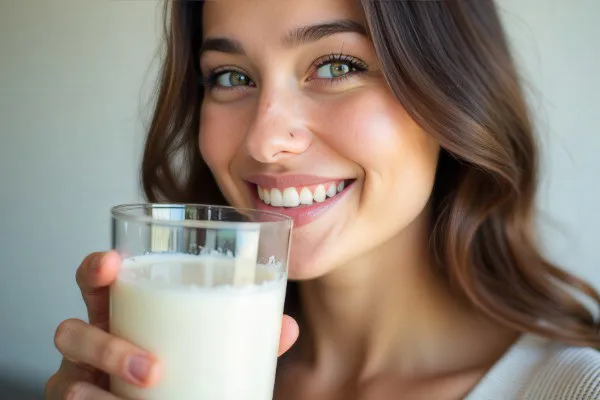
The Dairy Dilemma Revisited
A dermatology perspective on full-fat vs low-fat dairy and its implications for skin health by Patrick Treacy, H. Dip Dermatology, HFACCS, MICGP, MBCAM
As we approach the release of the 2025–2030 Dietary Guidelines for Americans and similar revisions in Europe, one of the most significant reversals in nutritional orthodoxy is occurring in silence: the decades-long recommendation to preferentially consume low-fat and skimmed dairy products is finally being abandoned. For those of us in clinical dermatology who have spent the last twenty years managing an epidemic of adolescent and adult acne that appeared to correlate with the precise period when low-fat dairy became the default choice in schools and households, this reversal is long overdue. I first began to question the official low-fat dairy dogma in the early 2000s when a striking pattern emerged in my Dublin clinic: teenagers presenting with severe nodulocystic acne were almost universally consuming large volumes of skim or 1 %-fat milk, often two to four 500 ml cartons daily, sold as “healthy” school milk. Their intake of full-fat dairy, cheese, or yoghurt was minimal. When these patients were switched to full-fat milk or eliminated dairy entirely, clinical improvement was frequently dramatic and sustained. This was not a placebo effect; the temporal association was too consistent to ignore. The Epidemiological Evidence Base
The evidence base
The first large dataset to support this clinical observation came from the Nurses’ Health Study II retrospective analysis published in 2005. Among 47,355 adult women recalling their teenage diet, those in the highest quintile of skim-milk intake had a multivariate-adjusted odds ratio for physician-diagnosed severe teenage acne of 1.44 (95 % CI 1.21–1.72, P-trend <0.001), whereas whole milk showed no significant association (OR 1.12, 95 % CI 1.00–1.25). Low-fat milk occupied an intermediate position (OR 1.16).¹ Subsequent prospective cohorts have repeatedly replicated this gradient. A 2006 Harvard School of Public Health study of 6094 US girls aged nine to 15 years followed for three years found that greater consumption of skim and low-fat milk, but not whole milk or cheese, was positively associated with acne prevalence.² A companion study in 4,273 boys published in 2008 showed the same pattern.³ The most comprehensive quantitative synthesis to date remains the 2018 systematic review and meta-analysis of 14 observational studies involving 78,529 children and young adults. Compared with the lowest category of intake, the highest category of skim-milk consumption was associated with an 82 % increased odds of acne (pooled OR 1.82, 95 % CI 1.34–2.47), low-fat milk with a 25 % increase (OR 1.25, 95 % CI 1.10–1.43), and whole milk with only a 12 % increase that did not reach statistical significance (OR 1.12, 95 % CI 1.00–1.25). Notably, no significant association was found for yoghurt or cheese.4
More recent global data continue the trend. A 2023 case-control study from Bangladesh (n=200) and a 2025 NIH analysis of the Growing Up Today Study II cohort both confirmed that skim and low-fat milk remain the dairy sub-categories most strongly linked to moderate-to-severe acne. 5-6 Mechanistic Insights: Why Skimming Makes Milk More Acnegenic The differential effect of dairy fat content on acne risk is not mysterious when one examines the biochemistry of milk processing.
- Removal of lipid phase concentrates whey proteins and lactose per unit volume. Whey, particularly α-lactalbumin, is one of the most insulinotropic and IGF-1-elevating dietary proteins known.7 A single 500 ml serving of skim milk produces a greater post-prandial insulin surge than an iso-caloric serving of white bread, despite containing only 0.3 g fat.8
- IGF-1 and insulin stimulate hepatic IGF-1 synthesis, increase androgen bioavailability by suppressing sex-hormone-binding globulin, and directly activate the mTORC1 pathway in sebocytes and keratinocytes – the central molecular hub of acne pathogenesis.9-10
- The milk-fat-globule membrane (MFGM), which is largely discarded during skimming, contains sphingolipids and glycoproteins that appear to blunt intestinal IGF-1 absorption and systemic inflammation in animal models. 11 Whole milk therefore delivers a lower bioactive load of acne-promoting hormones and growth factors per calorie than its low-fat counterpart.
- Commercial low-fat flavoured milk, overwhelmingly marketed to adolescents, compounds the problem by adding 15–25 g of refined sugar per carton, creating a perfect storm of hyperinsulinemia, hyperandrogenism, and mTORC1 activation.
Cardiovascular and metabolic reassessment: Lessons for dermatology
While dermatologists are primarily concerned with cutaneous outcomes, we cannot ignore the broader context that drove the low-fat recommendation in the first place. The 2020s have seen a decisive shift in the cardiovascular literature away from blanket condemnation of dairy fat. The Prospective Urban Rural Epidemiology (PURE) study, involving 136 000 individuals from 21 countries followed for a median of 9.1 years, found that higher dairy fat intake (measured both by dietary recall and circulating odd-chain fatty acid biomarkers) was associated with lower total mortality (HR 0.93 per quintile, 95 % CI 0.89–0.97) and no increase in cardiovascular events.12 A 2021 consortium of four prospective cohorts totalling >142 000 participants similarly reported lower incident cardiovascular disease with full-fat dairy compared with low-fat.13
The 2023 meta-analysis of 23 prospective studies (n≈1 million) confirmed no association between full-fat dairy and CVD mortality but an inverse association with stroke.14These findings are consistent with the “dairy matrix” hypothesis: the same saturated fatty acids that raise LDL-cholesterol when consumed in isolation behave neutrally or beneficially when delivered within the complex structure of milk, cheese, or yoghurt, owing to polar lipids, calcium–casein interactions, fermentation by-products, and vitamin K2.15-16
Clinical recommendations for dermatologists in 2025
- Dietary history in acne patients should specifically distinguish between full-fat dairy (milk, yoghurt, cheese) and low-fat/skim milk products. The latter should be considered a probable acne trigger until proven otherwise.
- First-line dietary intervention in moderate-to-severe acne remains elimination of skim and low-fat milk (including flavoured school milk) for eight to 12 weeks while permitting moderate intake of full-fat fermented dairy (plain Greek yoghurt, kefir, hard cheese) if tolerated. This approach frequently yields visible improvement before systemic therapies are escalated.
- Patients choosing dairy-free alternatives should be steered toward unsweetened macadamia, hazelnut, or yellow-pea milks. Oat milk, even unsweetened, retains a high glycaemic load and should be avoided in acne-prone individuals.
- Butter and cream, despite high saturated-fat content, show no consistent association with acne in epidemiological studies and may be used sparingly as part of a whole-food diet.
Conclusion
For four decades, public-health policy instructed populations to remove the very component of dairy that appears to mitigate its acnegenic potential. The result was an iatrogenic increase in insulin/IGF-1-mediated acne that coincided almost perfectly with the introduction of mandatory low-fat school milk programmes across the Western world. The evidence now clearly indicates that whole and fermented dairy products are, at worst, neutral and, at best, protective for both cardiovascular and cutaneous health.
Skimmed and low-fat milk, particularly when sweetened, represents a rare example of a processed food that is objectively less healthy than its traditional counterpart.
As the 2025 Dietary Guidelines finally reflect this reality, dermatologists should lead the conversation, because the skin has been telling us the truth for the last twenty-five years.
References
1. Adebamowo CA et al. J Am Acad Dermatol 2005; 52:207-15
2. Adebamowo CA et al. J Am Acad Dermatol 2006; 54:207-14
3. Adebamowo CA et al. J Am Acad Dermatol 2008; 58:787-93
4. Dai R et al. Clin Dermatol 2018; 36:729-48
5. Rahman MM et al. Bangladesh J Dermatol Venereol Leprol 2023; 39:12-18
6. NIH Growing Up Today Study II, July 2025 update
7. Melnik BC. Dermatoendocrinol 2015;7: e1063751
8. Hoppe C et al. Am J Clin Nutr 2005; 82:1041-8
9. Melnik BC, Schmitz G. J Invest Dermatol 2009;129:17-30
10. Agamia NF et al. J Am Acad Dermatol 2018; 78:1142-51
11. Norris GH et al. Adv Nutr 2021; 12:1049-66
12. Dehghan M et al. Lancet 2018; 392:2288-97
13. Trieu K et al. Eur J Clin Nutr 2021; 75:1405-15
14. Jakobsen MU et al. PLoS Med 2023;20: e1004288
15. Thorning TK et al. Am J Clin Nutr 2016; 104:575-86
16. Astrup A et al. Am J Clin Nutr 2023; 118:5-18